
If you’ve ever tried to step back from client work only to find yourself dragged right back in, you’re not alone. Most firm owners say they delegate, but without the right hiring, training, and role clarity, “delegation” often turns into half-finished handoffs, rework, and frustration.
Ryan Lazanis knows the feeling. As a CPA and founder of Future Firm, he helps hundreds of accounting and bookkeeping firms make more money while stepping away from the day-to-day.
Over the years, he’s developed a simple framework for building a team that can truly own their work, so you can finally focus on growing your firm instead of running it minute-to-minute.
Here’s what he shared in his webinar with Plooto about how to hire and train a team that’s ready to take the reins.
1. Start with clear roles and responsibilities
Vague delegation kills productivity. When you say, “You handle bookkeeping clients,” that could mean anything from posting transactions to managing client meetings. Without specifics, your team will be forced to make guesses, and you’ll be forced to jump back in.
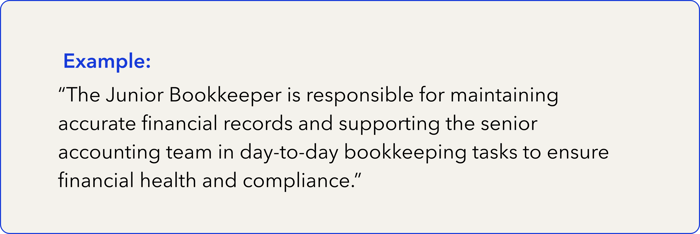
Craft a concise role description
In one to two sentences, describe exactly what the role is responsible for and why it matters.
Establish 3 – 5 key responsibility areas
Group related tasks into clear ownership “buckets.” For a junior bookkeeper, that might include:
- Transaction processing and recording
- Bank reconciliations
- Supporting financial reporting
- Compliance and record keeping
- Administrative support
Define responsibilities by cadence
Break each responsibility into daily, weekly, and monthly tasks. This helps your team prioritize without constant check-ins and gives you peace of mind that nothing’s slipping through the cracks.
2. Document how things get done
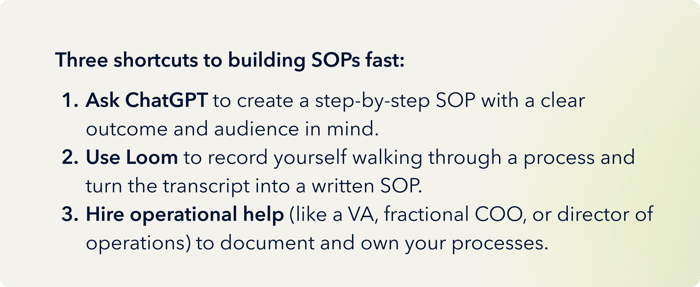
Hiring great people is only half the equation. Without standard operating procedures (SOPs), even experienced hires will do things differently than you expect.
Your SOPs should be just detailed enough for someone to follow without guesswork. Use screenshots, checklists, and step-by-step instructions.
3. Build a structure that supports delegation
If everyone reports to you, you’ll still be the bottleneck. Instead, implement an organizational chart that routes junior team members through managers or senior staff, not directly to you.
This creates layers of ownership and frees you from being the default decision-maker for every question.
4. Level up onboarding and training
Strong onboarding is what turns a new hire into a confident, capable team member who doesn’t need to ask you 20 questions a day.
Key onboarding moves:
 Send a welcome email outlining role, responsibilities, and success metrics for the
 first 90 days.
 Use checklists in tools like Karbon or Teamwork to ensure no steps
 are missed.
 Focus on the first three months with a clear plan for their first day, week,
 and month.
 Create a training library using Loom videos and SOPs so answers are
 always available.
 Assign a buddy or mentor to guide them through both the work and
 your culture.
When onboarding is intentional, delegation becomes natural. Your team knows what to do, how to do it, and where to go for help — without you in the middle.