Residential construction is an industry that doesn't leave much room for financial mistakes. Between managing subcontractors across multiple job sites, coordinating material deliveries, and handling recurring payments for equipment and services, builders deal with a constant barrage of payments that need to be tracked, approved, and paid on time.
Miss a payment, and your entire schedule falls apart. Lose track of an invoice, and suddenly you're explaining cost overruns to a client. If your accounts payable process becomes a bottleneck, you're losing time and money, and you're damaging relationships.
Accounts payable automation cuts through all of this. Builders need a financial foundation that enables growth instead of constantly getting in the way.
Streamlining high-volume bill payments in construction
If you're running an active construction business, you know the volume is relentless: major material purchases, subcontractor payments, and recurring payments for equipment rentals, site services, and utilities. Managing all these bill payments manually means something important eventually gets dropped.
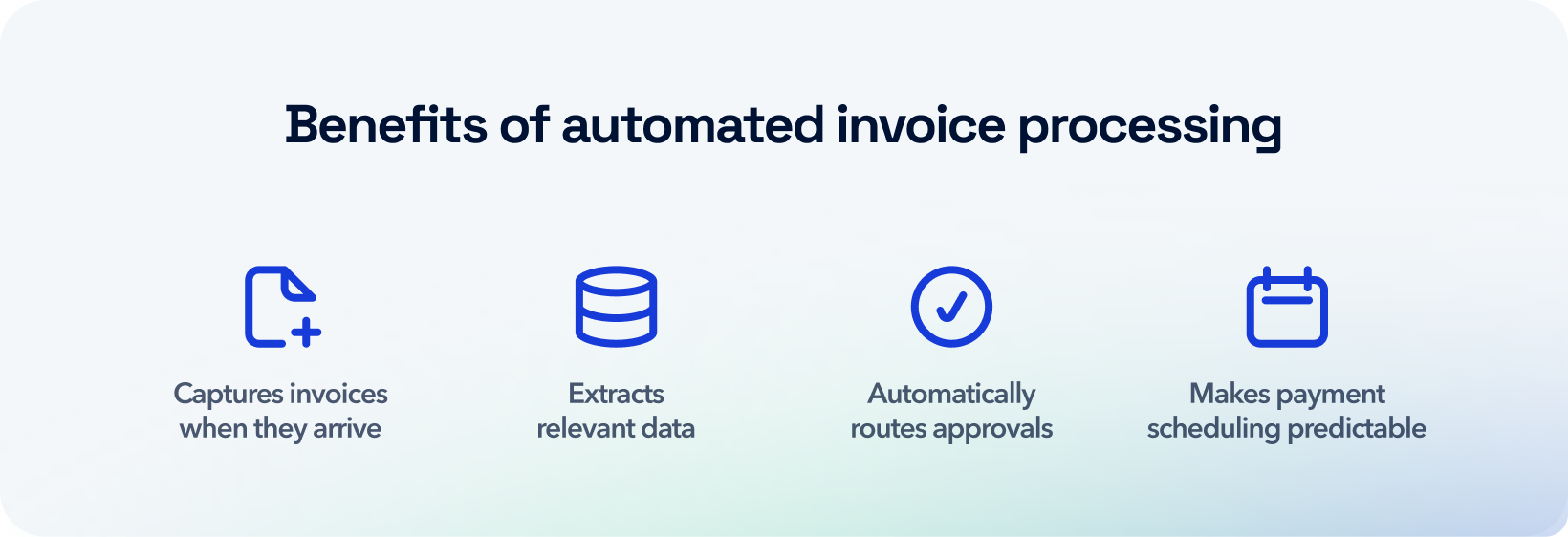
Automated invoice processing and payment scheduling removes the chaos from this equation. The right solution can capture invoices digitally the moment they arrive, extract the relevant data automatically and route approvals to the right people without manual intervention. Invoices get verified and queued for payment without anyone chasing paperwork or typing numbers into spreadsheets. Payment scheduling becomes predictable instead of frantic.
This reliability matters, especially when you're running multiple projects simultaneously. Your electrician needs to know they're getting paid Friday so they can schedule their crew for your next job. Your lumber supplier needs consistent payment terms so they keep prioritizing your orders. Automation keeps things consistent and running smoothly.
AP automation eliminates manual processes and errors
Traditional accounts payable is slow, and it's often riddled with mistakes. Say someone opens an invoice and manually enters it into your accounting system. Then they route it for approval. Days pass, and eventually someone remembers to make the payment.
AP automation replaces this entire workflow. Electronic payments of all types — EFT payments, ACH transfers, and wire payments — can all execute automatically once approvals are in place. With the right workflow automation tools, you can route invoices instantly, track approval status in real time, and flag any irregularities before payments go out.
The time savings can be substantial, and your office staff can redirect that reclaimed time toward managing projects and serving clients instead of shuffling papers. Plus, eliminating manual data entry removes duplicate payments and missed deadlines that come from human error.
In an industry where margins are tight and competition is fierce, operational efficiency determines whether a business scales smoothly or collapses under administrative weight as it grows.
Gaining financial control across multiple projects
Imagine you have multiple projects running, receivables that should hit your account "soon," and all the while, supplier invoices are due, subcontractor draws are coming up, and payroll hits on Friday. These are the situations where cash flow management stops being an accounting-only problem and becomes the thing that determines whether your business survives the month.
Having the right payment automation tools gives you the visibility you need. You can:
- Get a single, real-time view of what's been paid, what's pending, and what's overdue across all your projects.
- Track spending against budgets for each job individually.
- Spot cost overruns developing before they become disasters.
- Make informed decisions about taking on new work because you actually know your cash position at any given moment.
This level of financial control transforms how vendor management works too. Instead of vendors calling your office asking when they're getting paid, you can proactively communicate payment schedules to them. Your financial position is clear and current, so you don’t have to scramble to figure out if you can afford a material order.
Better cash flow management creates better project outcomes, which leads to happier clients and stronger vendor relationships. Stronger relationships pave the way for better terms, more referrals, and steady growth for your business. But none of this can happen without the infrastructure to support it.
Let's address recurring payments specifically, because these are easy to overlook but they can throw your entire budget off track. Equipment rentals, insurance premiums, software subscriptions, monthly service contracts—payment automation ensures all of these recurring payments happen on schedule. That means no missed payments, service interruptions, or late fees eating into your margins.
Strengthening vendor relationships through payment reliability
In construction, your reputation determines everything about your business outcomes. If you pay your people on time consistently, you become the builder everyone wants to work with: Your framer blocks out time for your projects first, your electrician squeezes you in when you're in a bind, and your suppliers call you when materials are scarce.
Automated payments eliminate uncertainty and the need for excuses. Payments go out when they're scheduled to. This reliability builds relationships that last for years and fuel sustainable growth.
Security and compliance that protects your business
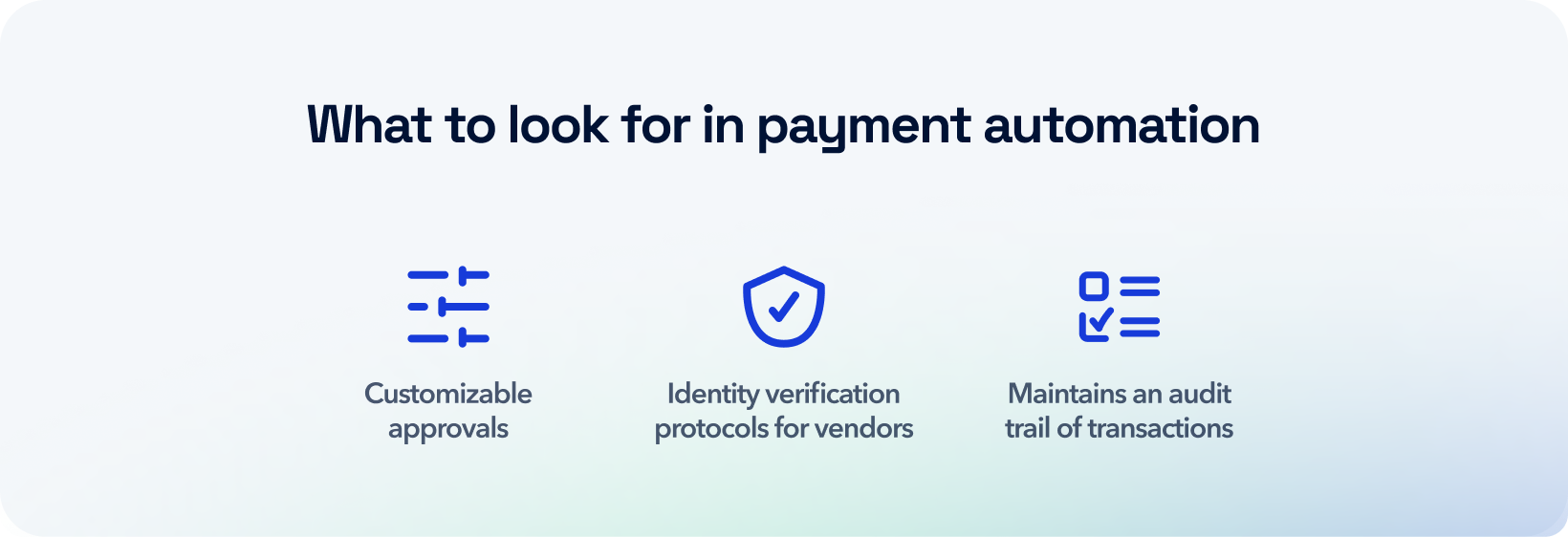
Make sure your payment automation tool includes identity verification protocols that confirm you're paying the vendor you intend to pay. The right one should let you maintain a comprehensive audit trail of every transaction, approval, and change so you can track exactly what happened and when.
Built-in controls like these catch suspicious patterns before money leaves your account. They protect your bank balance, but also the personal and financial information of everyone you work with.
Construction accounting comes with serious compliance demands. You're dealing with multiple jurisdictions, different tax requirements, and documentation requirements from lenders and clients.
Automated systems handle this complexity systematically, and every payment generates the documentation you need. For example, Plooto's integration with QuickBooks, Xero, and NetSuite means reports can be produced instantly instead of manually compiling data over several days.
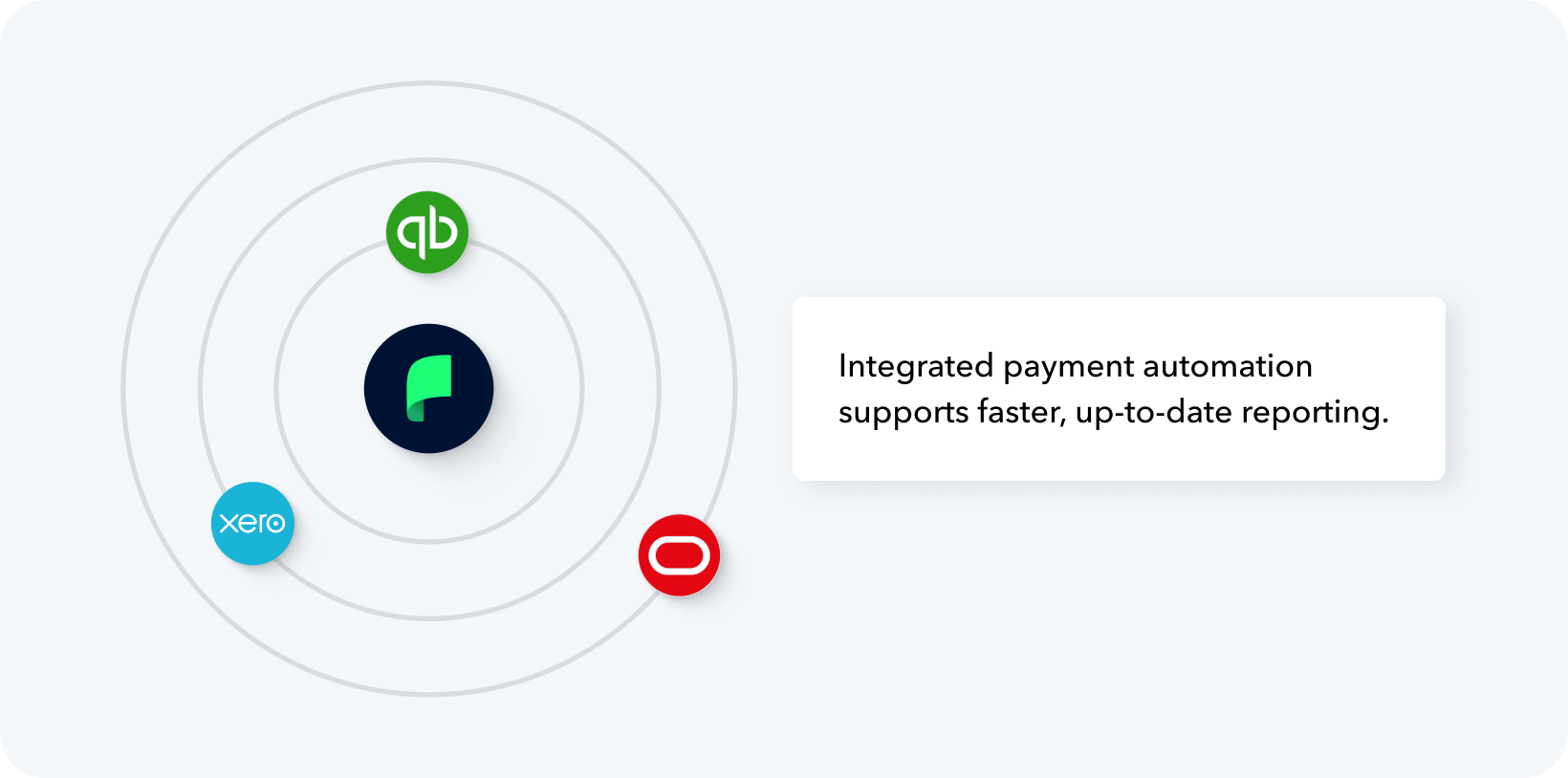
This makes tax preparation and year-end audits straightforward, especially when you're operating across multiple municipalities or states with different requirements.
Payment automation transforms accounts payable from a constant liability into a strategic advantage that helps you build a stronger business, protect what you've built, and scale with genuine confidence.